

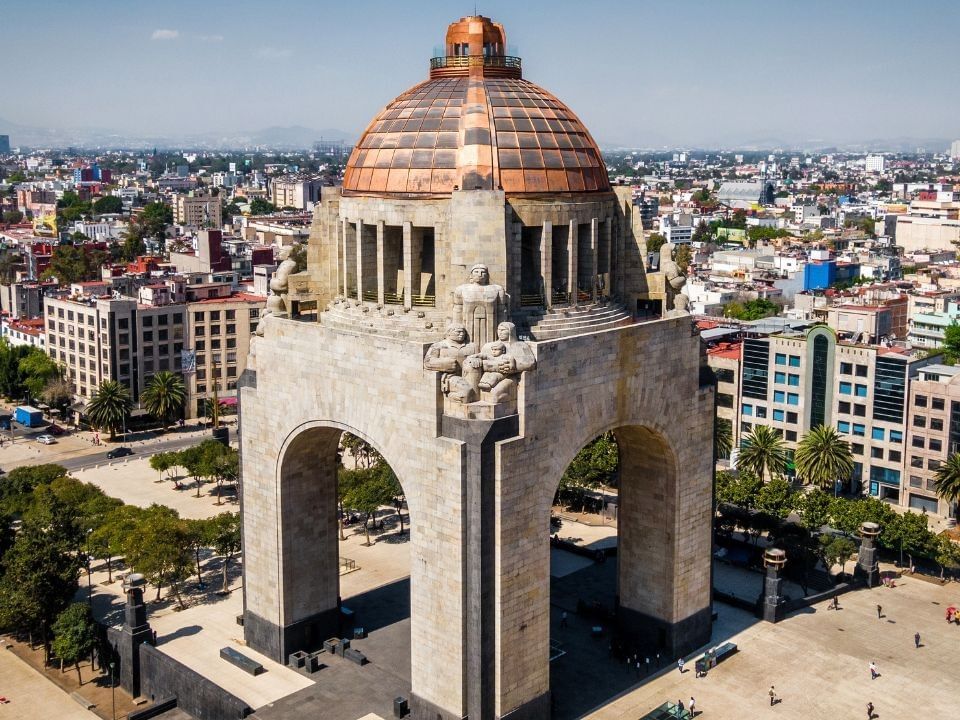
The Monument to the Revolution houses a collection of art, documents, and objects from the Mexican Revolution. Discover the story behind its construction.
Inside the Monument to the Revolution: The story behind one of Mexico City’s most iconic landmarks
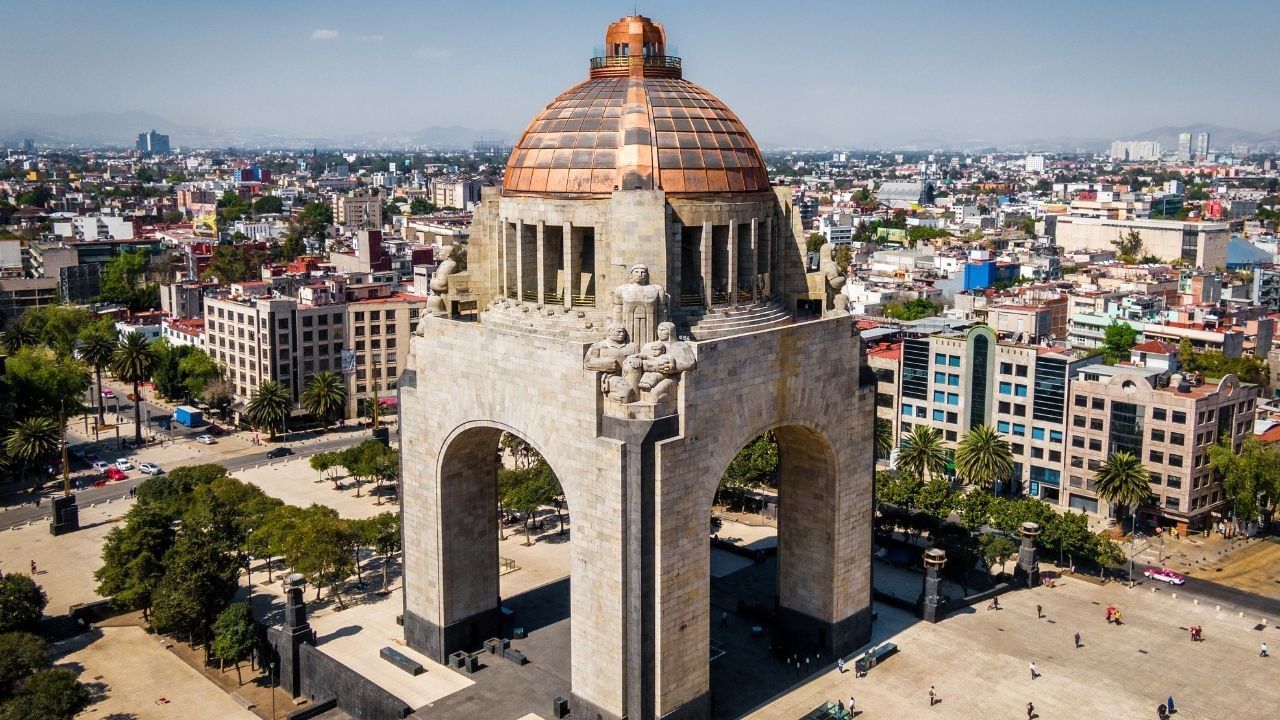 Photo: Shutterstock
If you’ve ever had the pleasure of exploring vibrant Mexico City—or are lucky enough to live in it—you’ve likely come across a structure that is impossible to overlook: the Monument to the Revolution.
Located on Avenida de la Republica in the Cuauhtemoc neighborhood, this architectural icon rises majestically in the heart of the Mexican capital. Here’s everything you need to know about the Monument to the Revolution, including the most relevant details about its architecture and history.
What makes the Monument to the Revolution so special?
Beyond its striking presence, this structure is a symbol of Mexico’s identity and history. Construction began in 1932 with the goal of commemorating the Mexican Revolution, a turning point in the nation’s destiny. Over the years, it has remained a symbol of perseverance and the ongoing fight for equality.
Its construction took place over several decades and has a fascinating backstory. The idea of building a monument in honor of the Mexican Revolution emerged in the 1920s—during the presidency of Plutarco Elías Calles—and shortly after the conflict came to an end.
Its purpose was to pay tribute to the revolutionary leaders who fought for change in the country.
The Architecture
The monument was designed by architect Carlos Obregón Santacilia, who chose an Art Deco style. The structure features a large central dome surrounded by four pillars representing the main revolutionary factions: the Zapatistas, Villistas, Carrancistas, and Maderistas.
With the design finalized, construction began in 1932. However, due to financial and political challenges, the project was halted several times, and it took decades before it was finally completed.
What is the Monument to the Revolution used for?
Over the years, the monument has served multiple functions. At one point, it was intended to become a mausoleum for the heroes of the Revolution, though that idea was never realized. Instead, the building housed government offices and was used for various purposes, including cultural events.
In the 1980s, construction was finally completed and the monument opened to the public. Today, the Monument to the Revolution is one of Mexico City’s most emblematic landmarks. It is home to the National Museum of the Revolution and features a popular observation deck that offers stunning panoramic views of the city.
National Museum of the Revolution
The National Museum of the Revolution houses a vast collection of art, documents, and objects from the Mexican Revolution. Its permanent exhibits and themed rooms offer an in-depth look at key events and figures of this pivotal chapter in Mexico’s history. The museum also includes a library and archive that provide researchers access to an extensive range of historical resources.
Visiting the National Museum of the Revolution during the upcoming November 20th long weekend is the perfect opportunity to dive into the history of the Mexican Revolution and immerse yourself in Mexico’s rich cultural heritage.
November 20th marks the beginning of the Mexican Revolution, making this a particularly meaningful time to explore the museum and connect more deeply with the significance of this historic event.
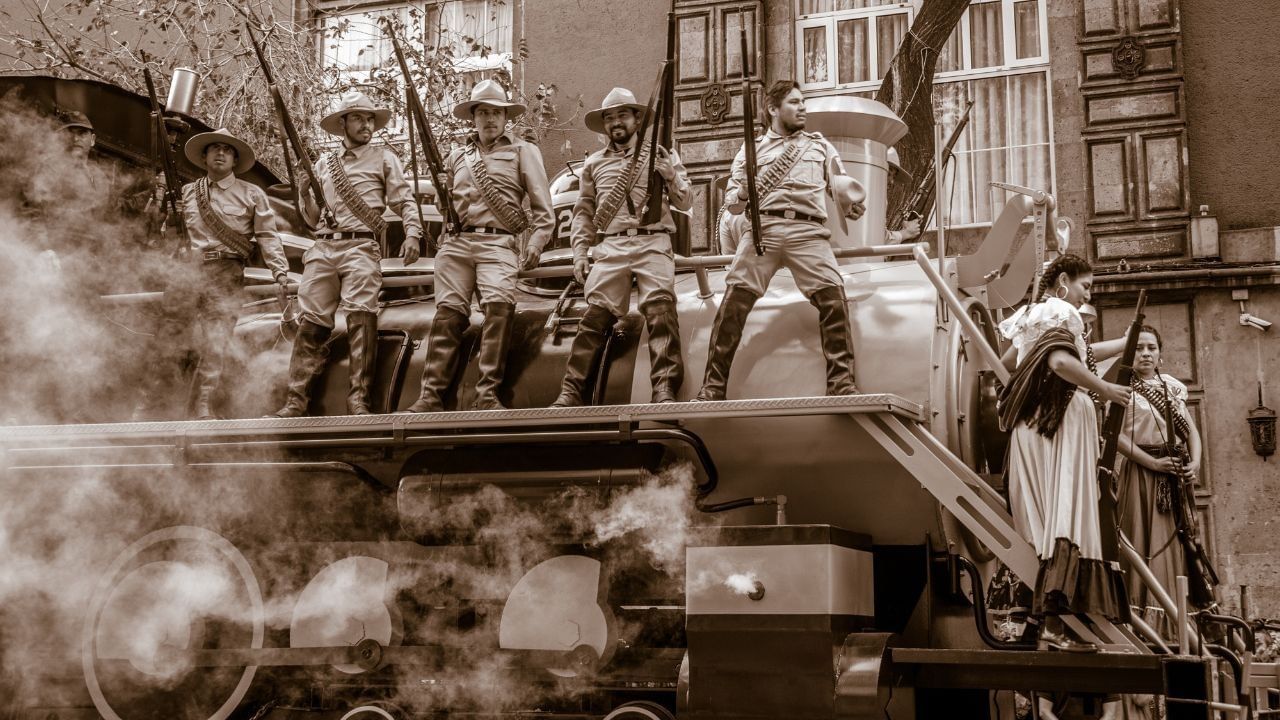 Photo: Shutterstock
Where to Stay in Mexico City on Your Visit to the Monument
Located just 15 minutes from the Monument to the Revolution, Camino Real Polanco sits in the residential and commercial area of Anzures, offering a peaceful retreat amid the city’s bustle.
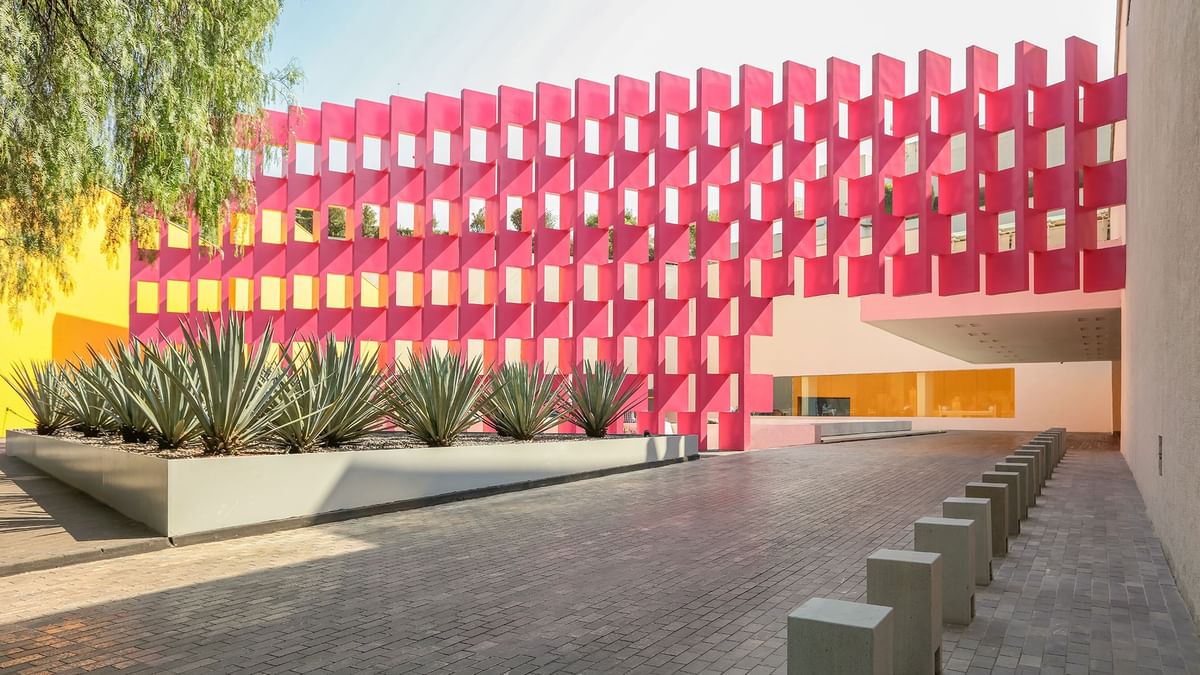
Originally built for the 1968 Olympic Games, this hotel is a stunning example of Mexican modernist architecture designed by renowned architect Ricardo Legorreta. With its signature color palette and international art pieces, it is considered a Hotel-Museum. The property features world-class restaurants and multifunctional venues for social and corporate events. Guests enjoy top-tier amenities including a pool, spa, kids’ club, and more.
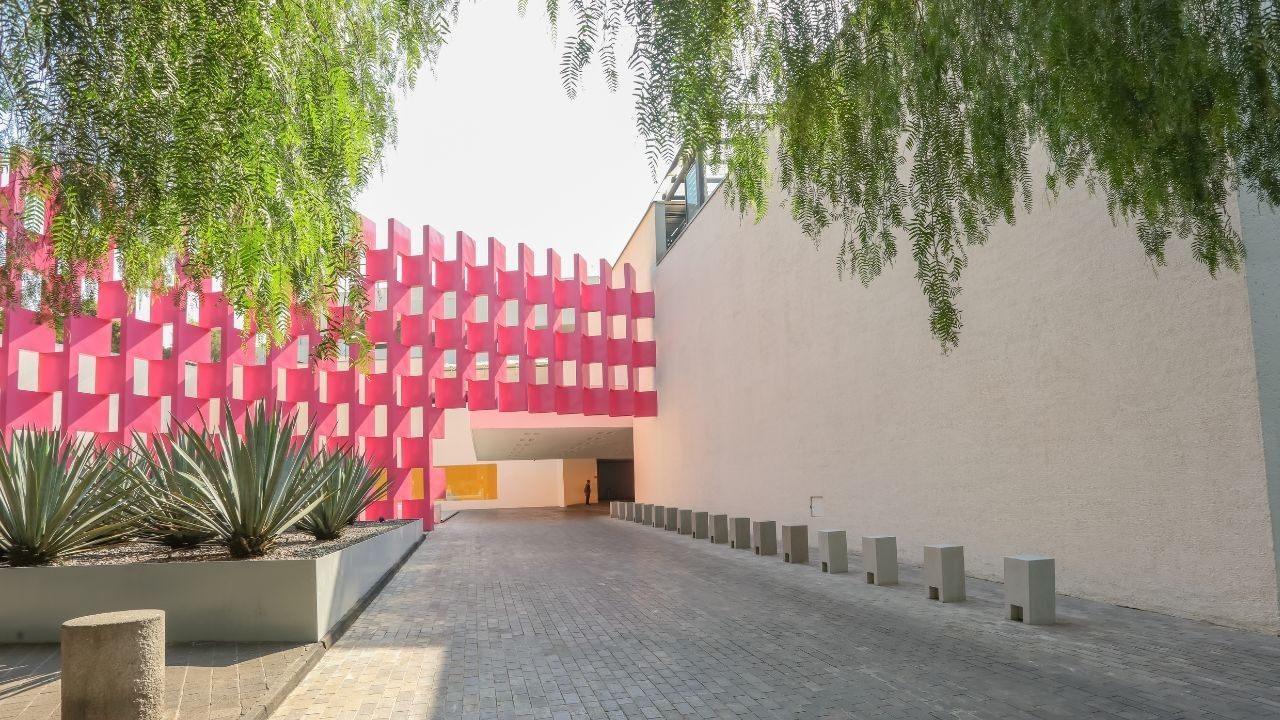
Its prime location in Polanco places you near major cultural attractions such as Chapultepec Park and several acclaimed museums. Benito Juárez International Airport is just 10 km away. The hotel’s concierge is available to help you plan your stay and explore the city.