
Discover the essential elements of a traditional Day of the Dead altar and the symbolism behind each item. Create a meaningful and authentic ofrenda.
Day of the Dead Altar uide: The essential elements and their meaning
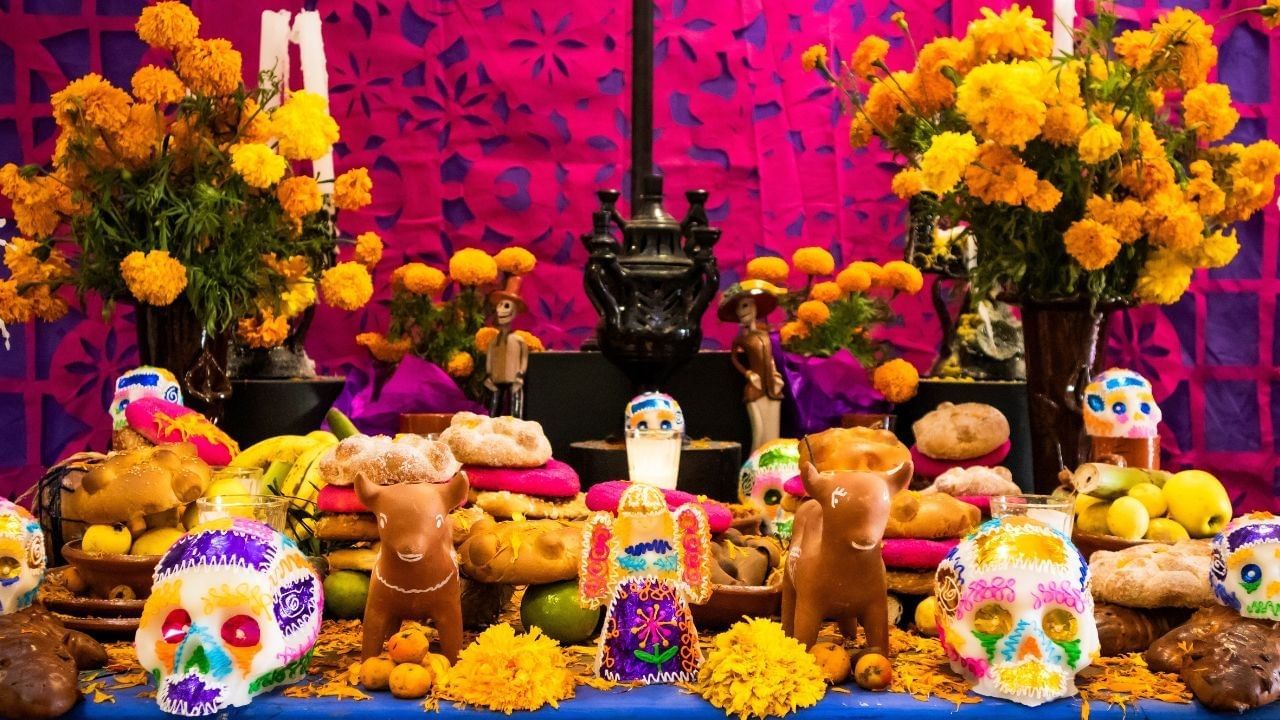 Photo: Shutterstock
During Dia de Muertos (Day of the Dead), Mexicans honor their loved ones who have passed on through time-honored traditions, and one of the most meaningful is the creation of ofrendas—altars dedicated to the departed and often personalized for each soul.
An altar serves as a bridge between the living and the dead, offering a way to remember and celebrate those who are no longer with us by surrounding their memory with the things they loved in life. It is also a powerful connection to Mexican spirituality and cultural heritage. While every ofrenda varies depending on the person it honors, these are the elements that should be part of any Día de Muertos altar.
Main elements of a Day of the Dead Altar
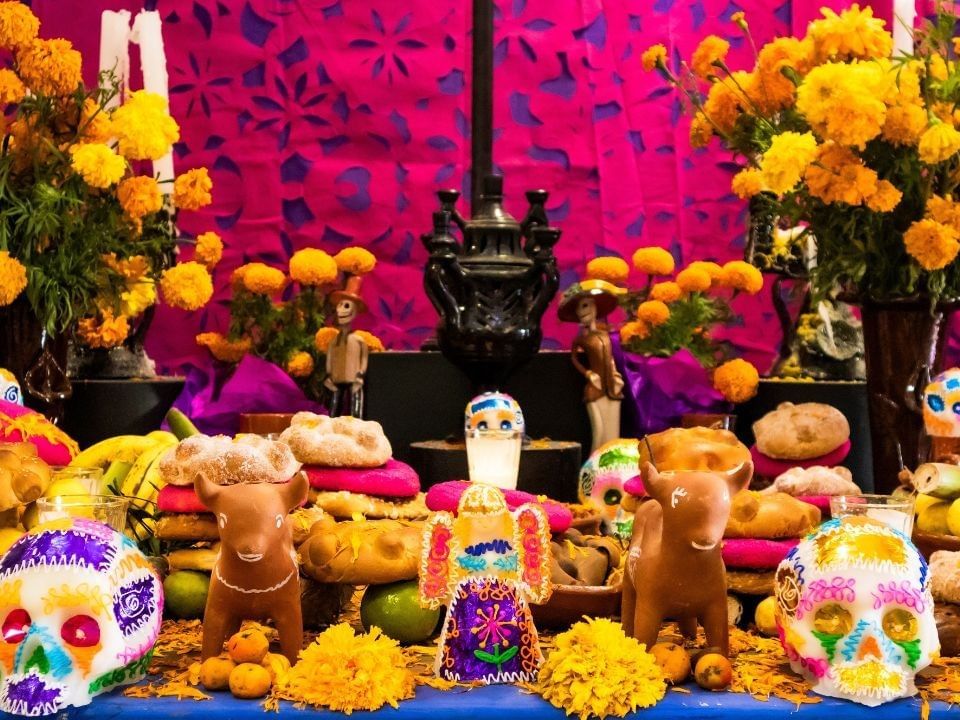
At the heart of every altar is the offering itself—a surface often dressed with papel picado in bright colors. This space becomes the foundation where symbolic elements are placed to create a bridge between worlds.
Flowers
Flowers, especially marigolds (cempasuchil), are essential. Their vibrant color and strong scent are believed to guide the spirits back to the altar. They also symbolize the fleeting beauty and impermanence of life.
Candles
Candles represent the light that helps souls find their way back to the world of the living. They also symbolize faith and trust in life beyond death.
Food
Food is vital to the altar, since it is believed the dead return to savor their favorite dishes. Staples include pan de muerto, mole, fruit, chocolate, and atole—though families often add the personal favorites of the loved ones they are honoring.
Beverages
Water is indispensable, meant to refresh the souls after their long journey back. Tequila, pulque, and other drinks are also placed on the altar to quench their thirst.
Sugar skulls
Sugar and amaranth skulls are joyful representations of death. Often decorated with names, they serve as a reminder that death is an intrinsic part of life—something to acknowledge, not fear.
Photos & personal belongings
Photographs and personal belongings of the departed are placed on the altar so their souls can recognize the space and feel welcomed.
Candles & Copal
Copal, a resin extracted from local trees, is used as incense. Along with candles, it purifies, protects, and helps guide spirits back to the living world.
Crosses & Saints
Though Día de Muertos has pre-Hispanic origins, Catholic elements such as crosses and saints are often included, representing the influence of Christianity on Mexican traditions.
Papel Picado
Papel picado is a traditional Mexican craft made of delicate tissue paper intricately cut into decorative patterns. It represents the wind and the fragility of life. Its presence symbolizes the connection between the earthly world and the spiritual one.
Famous Day of the Dead Altars Worth Experiencing in Mexico
In Mexico City, Día de Muertos unfolds on a truly monumental scale. Every year, the city becomes a living canvas of tradition, artistry, and cultural expression through its celebrated ofrendas and megaofrendas — immersive installations that transform public spaces into unforgettable journeys through Mexican heritage.
Among the most iconic is the Megaofrenda at National Autonomous University of Mexico in Ciudad Universitaria, where each edition surprises visitors with monumental altars, contemporary installations, performances, and cultural programming that beautifully reinterpret one of Mexico’s most treasured traditions.
Another essential stop is the historic Zocalo, where every season unveils a new vision of Día de Muertos through large-scale exhibitions, immersive experiences, and vibrant festivities that attract both locals and international travelers alike.
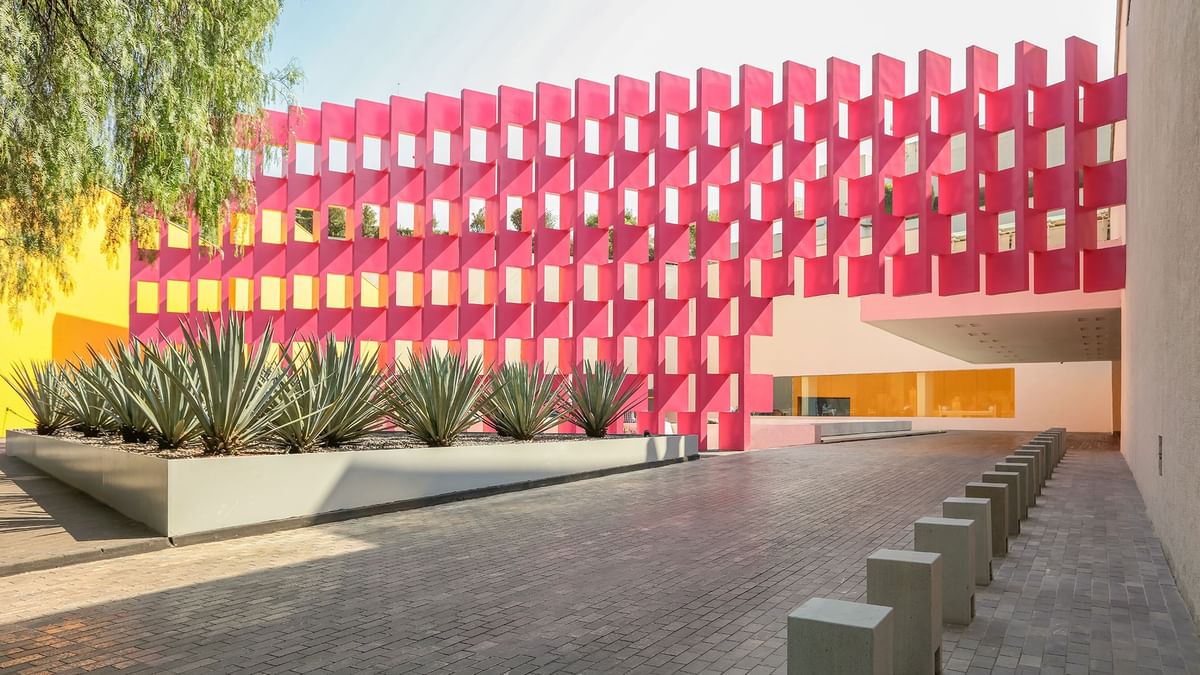
For those looking to experience the season in complete comfort, Camino Real Polanco Mexico offers an ideal luxury stay. Perfectly located for exploring the city’s most emblematic altars and cultural landmarks, the hotel allows guests to move seamlessly across the capital before returning to a setting defined by timeless design, architectural history, and refined hospitality.
Beyond the capital, one of Mexico’s most extraordinary Day of the Dead traditions can be found in Huaquechula. The town’s iconic altars stand as a breathtaking testament to the devotion residents hold for loved ones who have passed away. These spectacular creations are among the country’s most moving and visually striking Día de Muertos experiences.
Nestled between the Sierra Mixteca mountains and the majestic Popocatépetl volcano, Huaquechula transforms during the first days of November into a place of profound beauty and symbolism. Families construct elaborate memorial altars in honor of those who passed away during the year, blending ancestral Indigenous ornamentation with Catholic influences traditionally seen in Holy Week altars.
Known locally as cabos de año, these pyramid-shaped altars are built inside family homes and entryways to welcome the souls of the departed back for a ceremonial feast prepared in their honor. Lavishly adorned with flowers, candles, religious imagery, embroidered textiles, and treasured personal belongings, the altars become deeply intimate expressions of remembrance and love.
The fusion of pre-Hispanic traditions and Catholic symbolism gives Huaquechula a distinctive identity unlike anywhere else in Mexico. More than acts of devotion, these altars are living works of art that embody the profound relationship between life, memory, and death within Mexican culture. Visiting Huaquechula during Día de Muertos offers a rare opportunity to witness one of the country’s most emotionally powerful traditions firsthand.
At its essence, the Mexican altar of the dead reflects the nation’s extraordinary spiritual and cultural richness. Every element placed upon it carries personal meaning, transforming the act of creation into a gesture of gratitude, remembrance, and enduring connection between generations.
For a luxurious stay while exploring this remarkable region, Quinta Real Puebla is an exceptional choice. Located in the historic heart of Puebla, the hotel occupies the former Convent of La Limpia Concepción, a magnificent 16th-century building founded in 1593 and carefully restored into one of the city’s most refined hospitality experiences.
Beyond its architectural splendor, the hotel offers remarkable dining experiences at Tierra Mía restaurant and Novicias mezcalería, making it ideal for romantic escapes, cultural getaways, or celebratory stays immersed in the history and elegance of Puebla.