

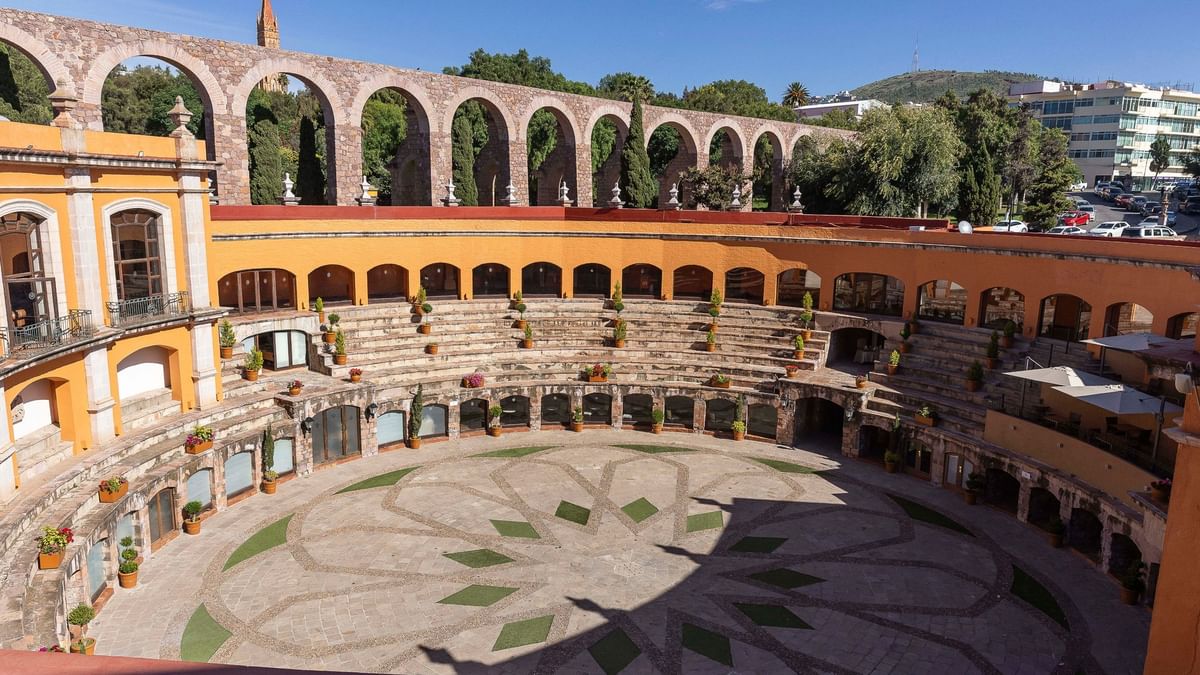
Colonial tradition and modernity coexist in this must-visit destination, especially famous for its celebrations.
One of the most striking destinations for those passionate about Mexico’s New Spain history is Aguascalientes.
Colonial tradition and modernity coexist in this must-visit destination, especially famous for its celebrations.
One of the most striking destinations for those passionate about Mexico’s New Spain history is Aguascalientes.
Its Historic Center is home to numerous sites that reflect the rich past of our nation, offering a unique experience for visitors wishing to immerse themselves in the cultural and architectural heritage of the region.
Walking its streets—and especially along the Juárez walkway—becomes a one-of-a-kind experience if you appreciate the colonial architecture introduced by the Spaniards, whose essence remains intact to this day.
The grand mansions and vivid colors, together with nearby parks and boulevards, provide ideal places to rest and pause for a moment to admire human creation.
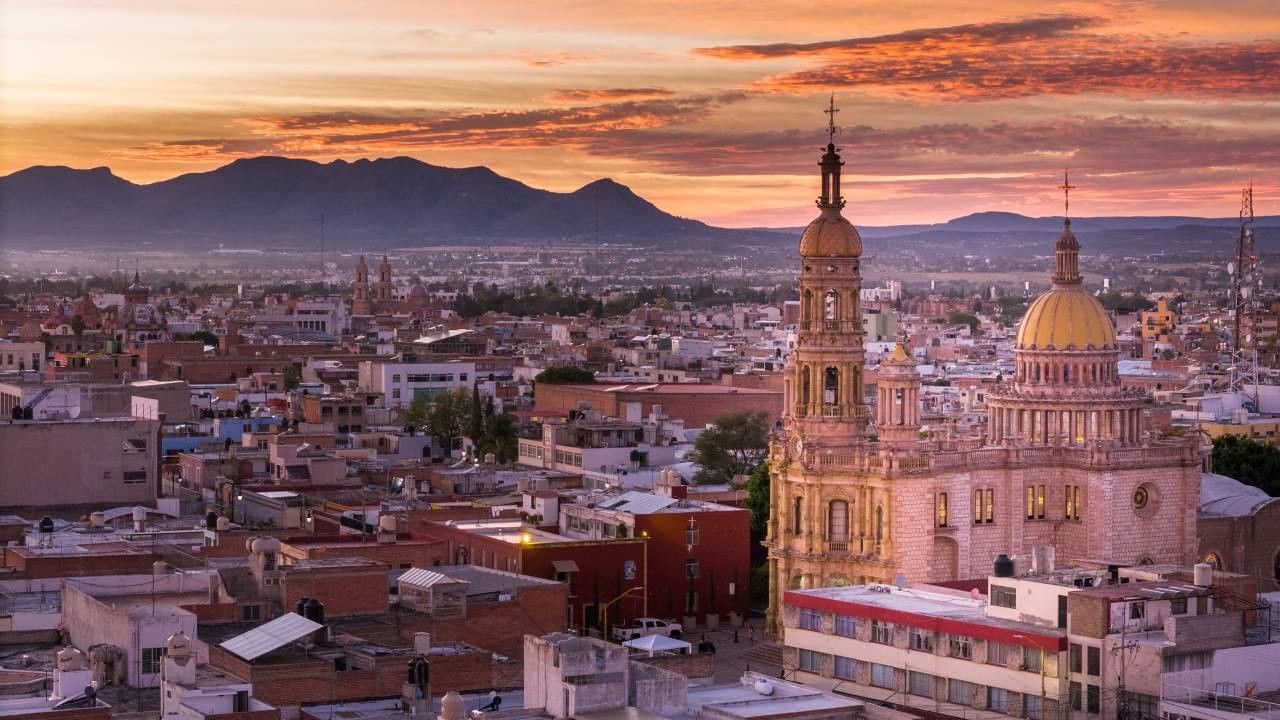 Photo: Shutterstock
Located in north-central Mexico, Aguascalientes is a capital with a long and important history, as it once formed part of the routes used by merchants to transport goods, especially silver. This city serves as the gateway to Zacatecas and San Luis Potosí.
You’ll be amazed by the wonders Aguascalientes has to offer, such as the impressive Cathedral Basilica of Our Lady of the Assumption. Located in the heart of the city, in the emblematic Plaza de la Patria, this church began construction in 1704. However, it wasn’t until 1899 that it was officially designated a cathedral.
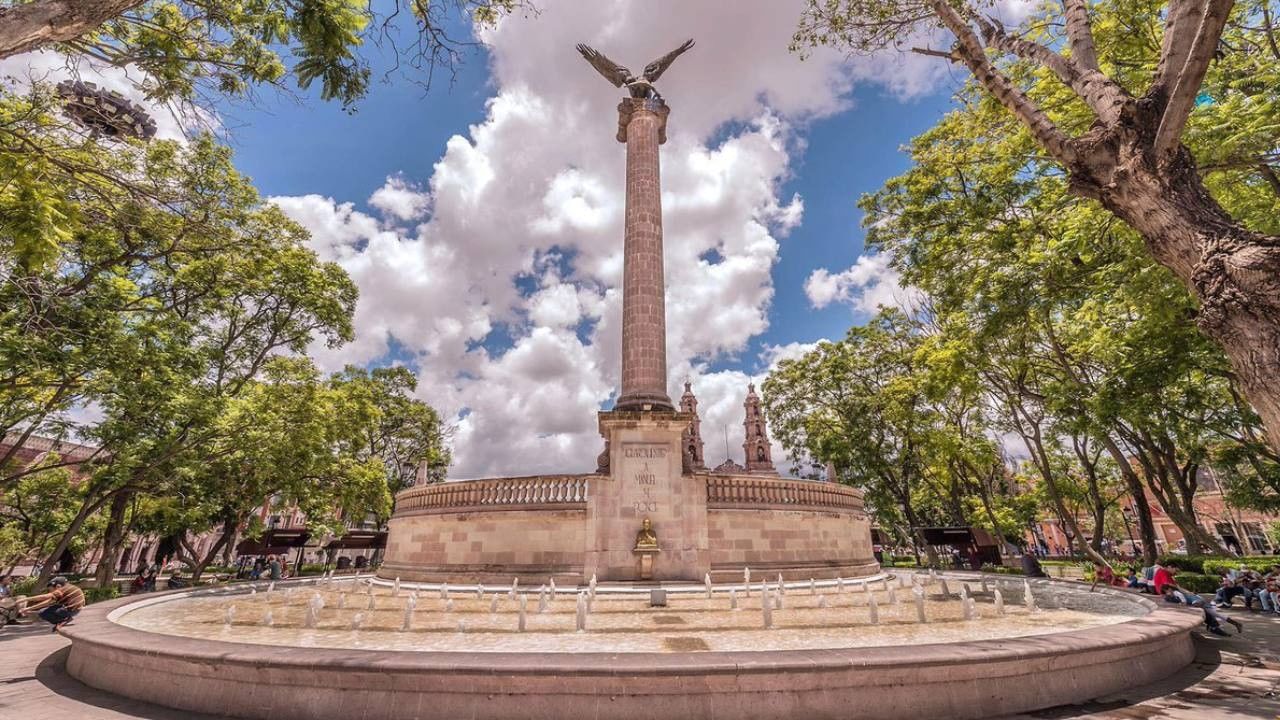 Plaza Patria. Photo: X Secretariat of Tourism of Aguascalientes
Previously, the site was home to two chapels, the oldest dating back to the 16th century, making this land one of the earliest religious centers in New Spain.
Inside the cathedral, you’ll find golden finishes, and in the atrium, visitors can admire an image of Our Lady of the Assumption, the name given to the Virgin Mary when she died and ascended to heaven.
Pink quarry stone can also be admired in two other iconic temples of the state: San Antonio and San Agustín, both considered among the most beautiful within local tourist routes.
In the Historic Center of Aguascalientes, another feature you’ll notice from Plaza de la Patria is the Exedra column, crowned by a sculpture of an eagle.
Its name comes from the semicircular quarry stone construction at its base, built in a neoclassical style.
There are also some stories surrounding this monument, built in 1808. For years it displayed an image of King Ferdinand VII, but after Mexico’s Independence it was replaced with a republican eagle.
Of course, in a city as rich in culture as Aguascalientes, museums are a must. The two main ones are the National Museum of Death and the José Guadalupe Posada Museum.
The National Museum of Death showcases how Mexicans view and honor their departed loved ones. Death masks, old photographs, Talavera skulls, as well as paintings and figurines, form part of the collection. Visitors are deeply impacted by the diverse worldviews displayed here.
Though smaller than other museums, its extensive collection will keep you exploring for hours.
Meanwhile, the José Guadalupe Posada Museum pays tribute to Mexico’s most important illustrator, engraver, and cartoonist, who was born in this city in 1852.
Internationally recognized as the creator of the “Calavera Garbancera,” later known as La Catrina, he redefined death in everyday life, using these images as a means of social critique.
 Museo José Guadalupe Posada. Photo: Facebook Museo José Guadalupe Posada
Through his strokes, Posada opened a new chapter in Mexican popular culture, introducing an essential element into the country’s worldview. His work remains a legacy for humanity.
Talking about Aguascalientes without mentioning the San Marcos Fair would be unthinkable. Located in one of the city’s most popular neighborhoods, it preserves one of the most beautiful gardens in the capital.
By day or by night, visiting this place is a full sensory experience, filled with sounds, aromas, and a perfect balance between nature and urban life.
Of course, during the San Marcos Fair—held between April and May—the neighborhood transforms into a massive celebration, making it clear why it’s one of the oldest and most visited fairs in the country.
To fully enjoy the city’s culture, stay at Quinta Real Aguascalientes. With its architectural design and the comfort of its facilities, you’ll experience the elegance of New Spain heritage.
Its privileged location places you just minutes from the Historic Center of Aguascalientes and the lively San Marcos neighborhood, including its world-famous fair.
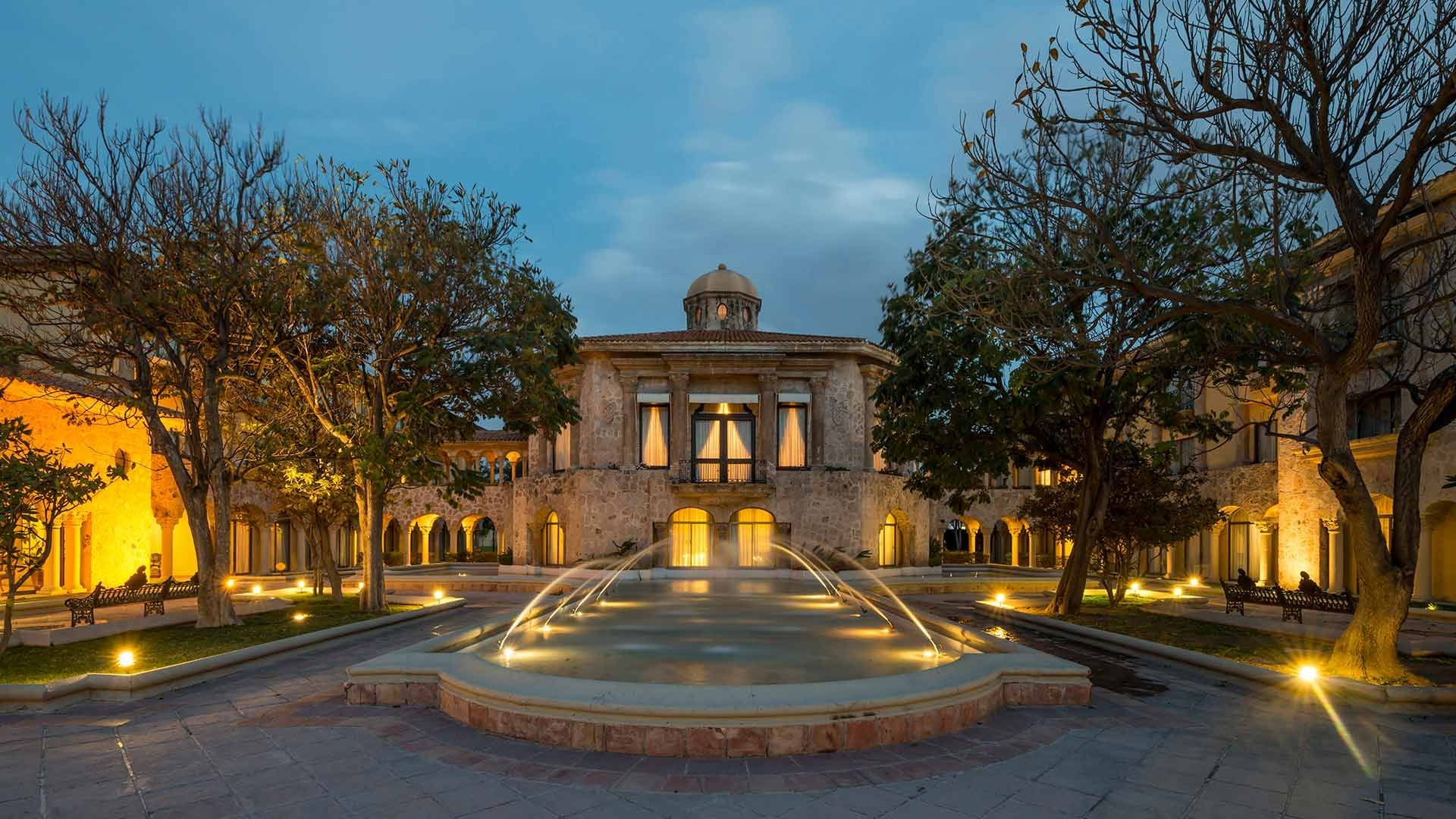 Photo: Quinta Real Aguascalientes
From the hotel lobby you’ll already feel the music, flavors, and magic of the city. But once you taste the delights of “Los Murales” restaurant-bar, you may not want to leave.
Enjoy your room at Quinta Real Aguascalientes and feel as though you’re living in a museum, where your life becomes the work of art deserving of the hotel’s comfort.
Camino Real Hotels has properties throughout Mexico, offering excellent service and uniquely styled spaces designed to meet the needs of all types of travelers.
Discover the features of all the suites waiting for you and book through the Camino Real Hotels website.