


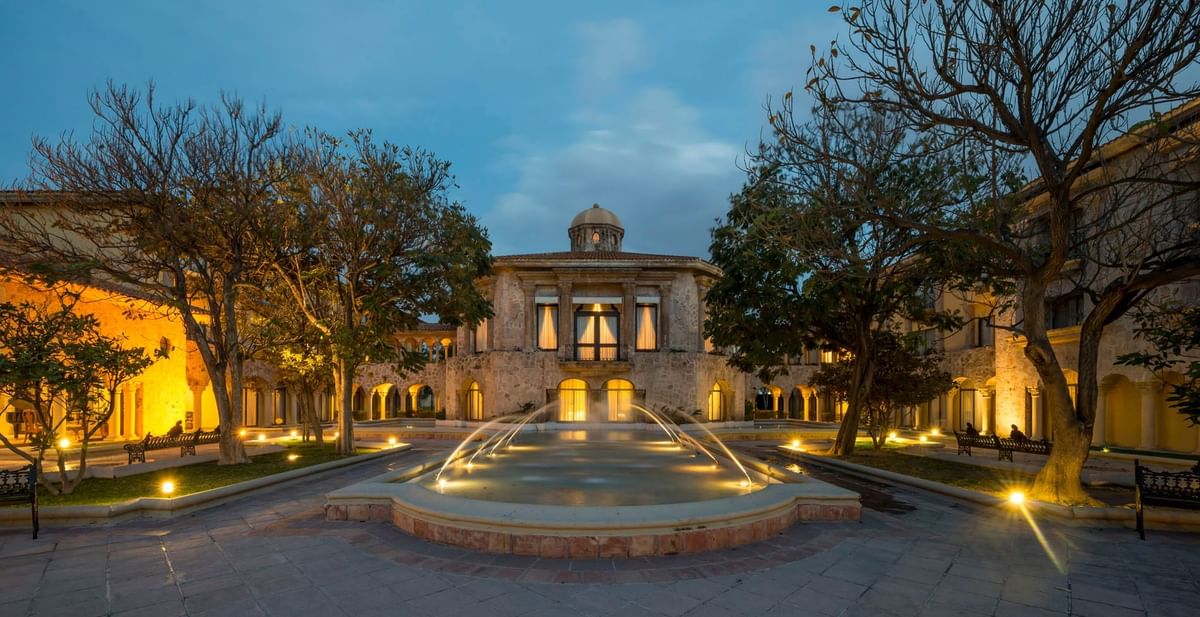
This is the story of the Hospicio Cabañas in Guadalajara, now a stunning art venue you’ll definitely want to visit on your next trip to the Perla Tapatía.
The history of Hospicio Cabañas in Guadalajara
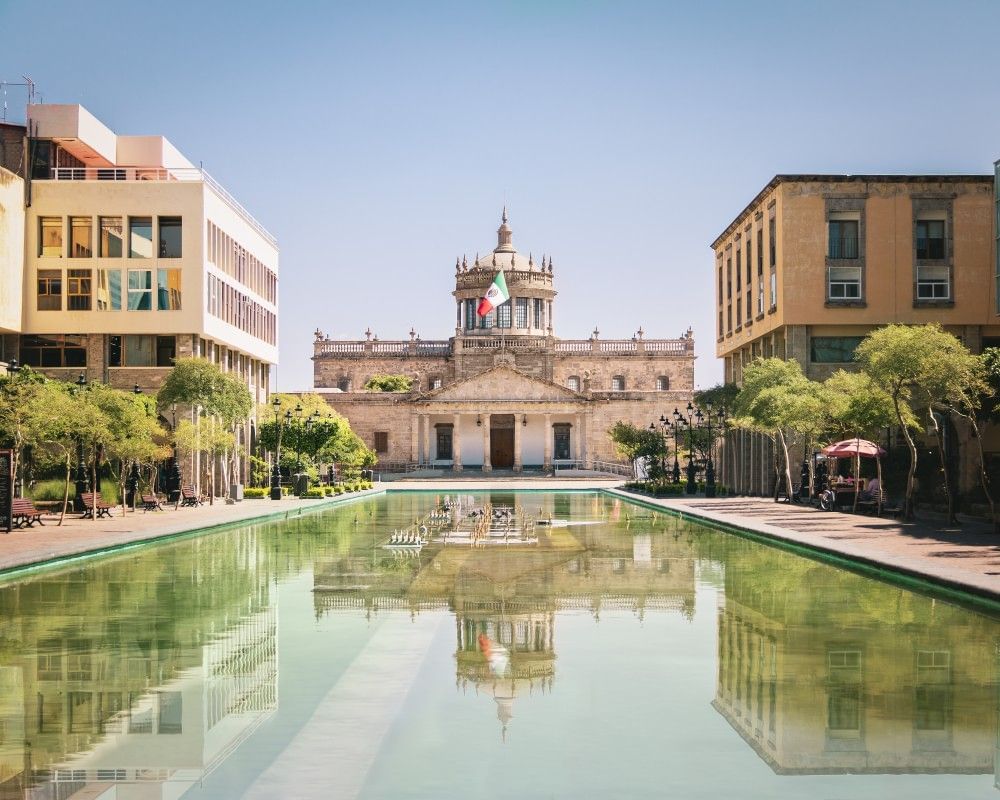
Photo: Shutterstock
The Hospicio Cabañas is one of Guadalajara’s most iconic historic landmarks. Built in the 19th century as an orphanage and hospice for the elderly and the sick, today it stands as a museum and cultural center. Let’s dive into its fascinating history.
Located in the Historic Center of Guadalajara, the site—now known as Museo Cabañas—is considered one of Mexico’s most important historical and cultural buildings.
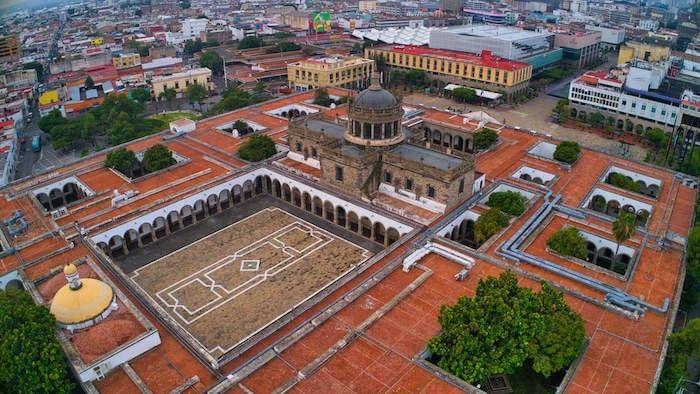
Photo: Museo Cabañas
The Origins of Hospicio Cabañas
Construction began in 1805, commissioned by Bishop Juan Cruz Ruiz de Cabañas y Crespo, who envisioned a place to help the city’s most vulnerable: orphans, the elderly, people with disabilities, and the infirm. The building was constructed in several phases and completed in 1845.
The bishop entrusted Spanish architect Manuel Tolsá with the design. When it opened, the institution was called Casa de la Caridad y la Misericordia (“House of Charity and Mercy”).
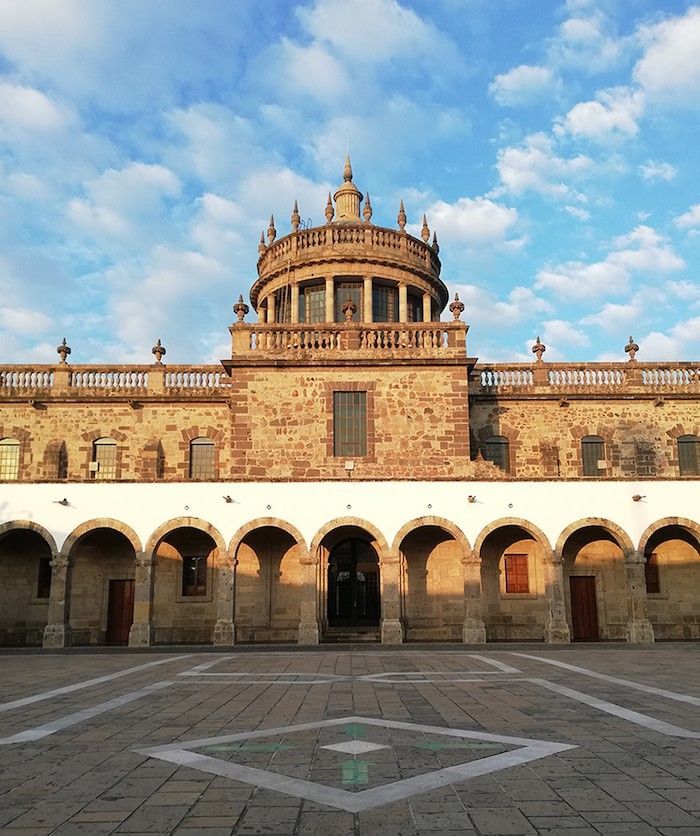
Photo: Museo Cabañas
The Architecture
The building blends neoclassical and baroque elements. Inside, you’ll find 23 courtyards of various sizes, framed by long corridors lined with Tuscan-style arches and pillars.
At the far end, a second chapel—simpler than the first—was originally used as the hospice’s dining hall and named Tolsá in honor of its architect.
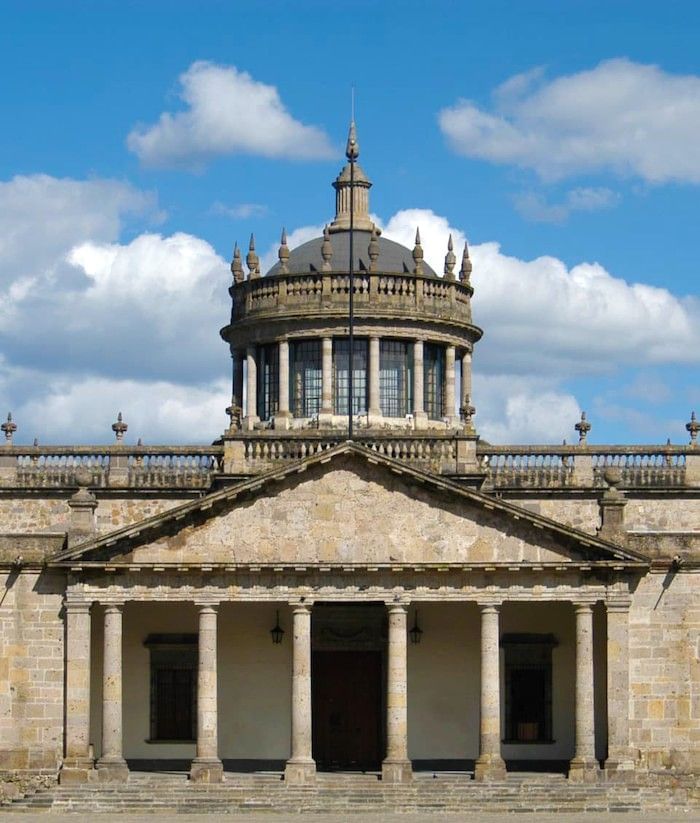
Photo: Museo Cabañas
From Hospice to Art Museum
Throughout its history, Hospicio Cabañas served as an orphanage, asylum, and hospital. In 1980, it was transformed into an art museum: the Instituto Cultural Cabañas, which remains active today.
The museum houses an outstanding collection of Mexican art, featuring works by renowned artists such as José Clemente Orozco, Diego Rivera, and David Alfaro Siqueiros.
Beyond the artworks, the building itself is a masterpiece—boasting grand galleries, a striking dome, and a vast central courtyard surrounded by arches and columns. Its walls are adorned with Orozco’s powerful murals, making the site a must-see attraction.
In recognition of its historical and architectural value, UNESCO declared Hospicio Cabañas a World Heritage Site in 1997.
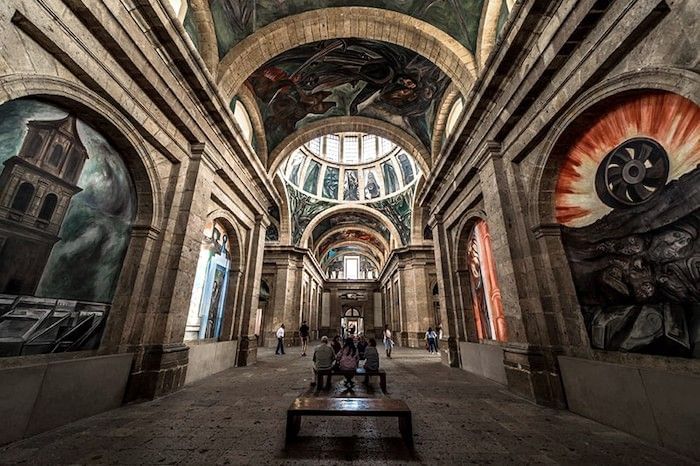
Photo: Museo Cabañas
Visiting Today
Today, Museo Cabañas continues to showcase Orozco’s murals in the Capilla Mayor, alongside rotating exhibitions of modern and contemporary art.
Visitors can take guided tours of the chapel, where 57 of Orozco’s masterpieces are displayed.
Where to Stay
If you’re planning a visit, Guadalajara offers excellent accommodation options near the museum:
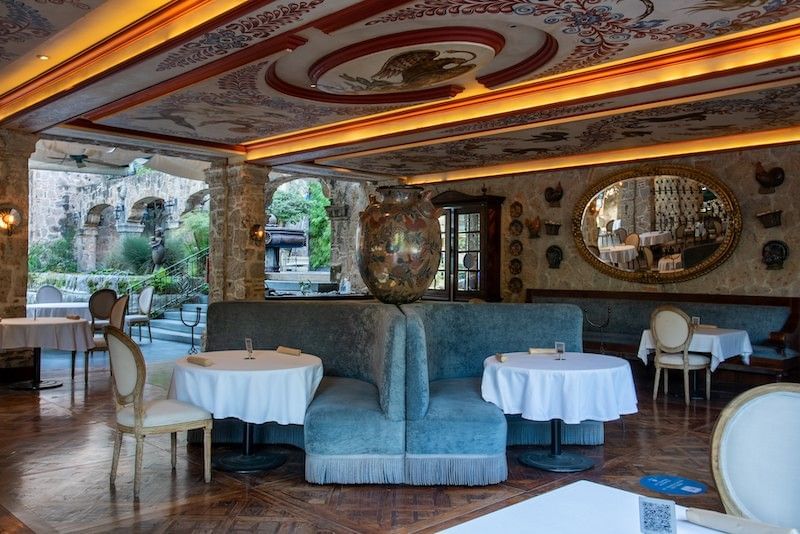
- Quinta Real Guadalajara (10 minutes from the museum) – A luxurious stay with deep cultural roots and historic charm. Expect antique furniture, original artwork, ivy-covered pink stone walls, gardens, fireplaces, and intimate suites perfect for escaping the buzz of the city.
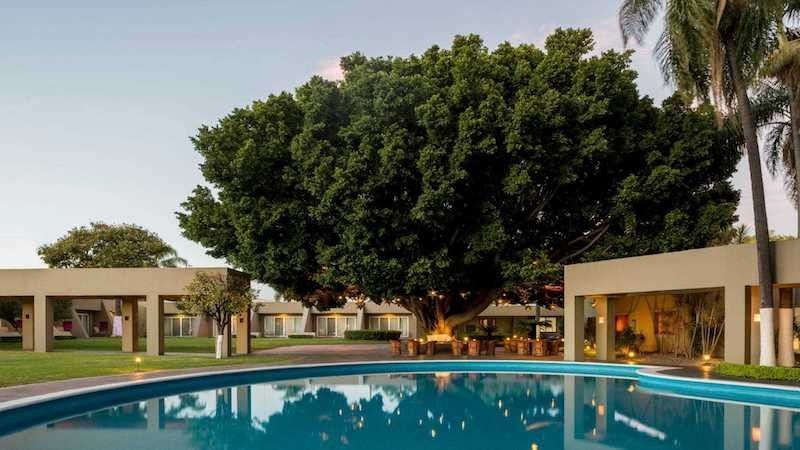
- Camino Real Guadalajara (20 minutes away) – Designed by Don Luis Martínez Negrete, this hotel is set amid expansive green areas, offering both comfort and tranquility.
Now that you know the story of Hospicio Cabañas, make sure to add it to your Guadalajara itinerary—or even better, let this cultural landmark be the perfect excuse for a trip to the Perla Tapatía.